Capuchin Crypt
Back to all places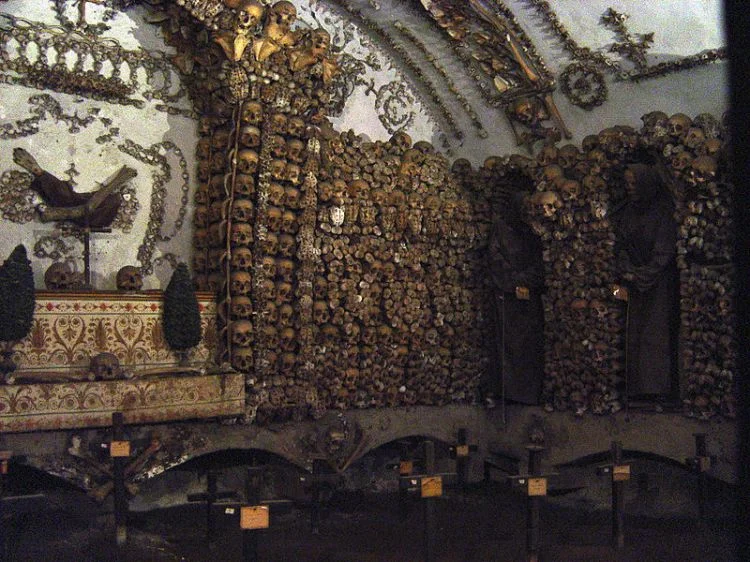
The Capuchin Crypt is a small space comprising several tiny chapels located beneath the church of Santa Maria della Concezione dei Cappuccini on the Via Veneto near Piazza Barberini in Rome, Italy. It contains the skeletal remains of 3,700 bodies believed to be Capuchin friars buried by their order. The Catholic order insists that the display is not meant to be macabre, but a silent reminder of the swift passage of life on Earth and our own mortality.
When the friars arrived at the church in 1631, moving from the old monastery, they brought 300 cartloads of the remains of deceased friars. Fr. Michael of Bergamo oversaw the arrangement of the bones in the burial crypt. The soil in the crypt was brought from Jerusalem, by order of Pope Urban VIII.
As friars died during the lifetime of the crypt, the longest-buried friar was exhumed to make room for the newly deceased who was buried without a coffin, and the newly reclaimed bones were added to the decorative motifs. Bodies typically spent 30 years decomposing in the soil, before being exhumed.
As of 1851, the crypt was only opened to the public, in exchange for an admittance fee, for the week following All Souls Day. It is currently (2022) open to the public daily except for certain holidays.
From 1851 to 1852, women were not allowed admittance to the crypt.
https://en.wikipedia.org/wiki/Capuchin\_Crypt
Photo: Stanthejeep
41.90496, 12.48854