Almone River
Back to all places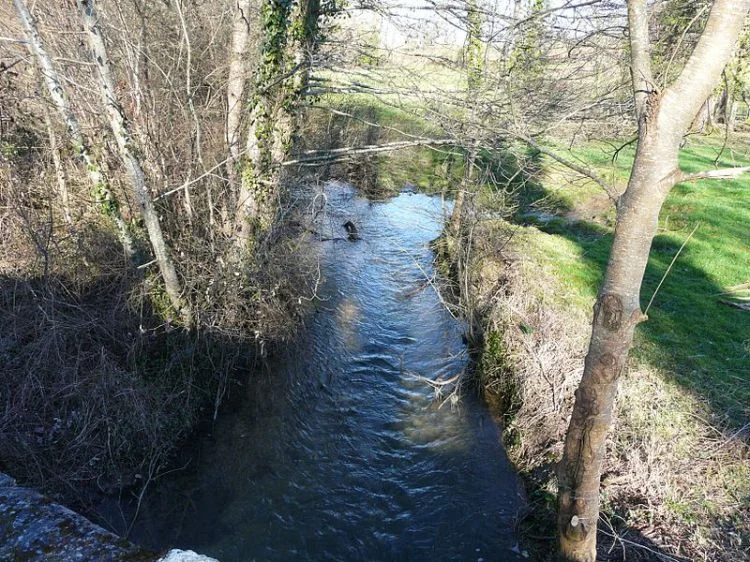
The Almone is a small river of the Ager Romanus, a few miles south of the city of Rome. Today the river is polluted and is channelled to a sewage treatment plant and no longer reaches its natural confluence with the Tiber.
The Latin name of the Almone, Almo (also the name of its corresponding deity), is derived from the Latin word almus, meaning "fertile" or "nourishing," which may derive from its connection to Cybele, also known as Magna Mater ("Great Mother").
In modern times the stream has been called Marrana della Caffarella. Marrana (or marana in Roman dialect) is a term that derives from the name of the ancient ager maranus, the fields that surround the Via Appia, and refers to the drainage channels that flow through the countryside near Rome. "Caffarella" refers to the valley, now a park, that the river runs through. The river has also been known as Acquataccio, a name with two possible derivations. It either refers to the nearby Appian Way, a corruption of Acqua d’Appia (which became d’Accia), or the suffix -accio is to be taken in its pejorative sense, and it refers to the marshy waters of the Caffarella valley.
The Almone originates in the Alban Hills from springs fed by the water of Lake Albano, and runs through the Appian Way Regional Park, fed by the waters of the numerous springs present in the area, including the so-called Acqua Santa ("Holy Water") of the Fonte Egeria. There, the Via Ostiensis crossed the river with a bridge known as the Travicella.
In the second century, the river was used to provide water for the luxurious gardens of the villa called Triopio of Herodes Atticus, erected on land brought to him by his wife, Aspasia Annia Regilla, and centuries after Rome’s fall it was employed for agricultural purposes: to irrigate fields, to water cattle, and to move millstones. The final stretch of the river flowed where the present-day Circonvallazione Ostiense in the Garbatella neighborhood lies. The Almone began to be used for industrial purposes in the early years of the twentieth century, when its waters were diverted to feed a paper mill on the Appian Way, but its decline accelerated in the 1920s, when its final course into the Tiber was covered over to allow the construction of the Rome-Lido railway, and also to provide water to the former thermal power plant on the Via Ostiense.
Pollution of the stream has made it such that today, its waters are entirely channeled into the Magliana sewage treatment plant and no longer reach the Tiber at all. It is diverted as soon as it runs under the Via Appia Antica, near Parco Scott, in back of the Piazza dei Navigatori. The closest landmark to the place where it formerly emptied into the Tiber is the large Gazometro.
https://en.wikipedia.org/wiki/Almone
Photo: Père Igor
41.85988, 12.52576